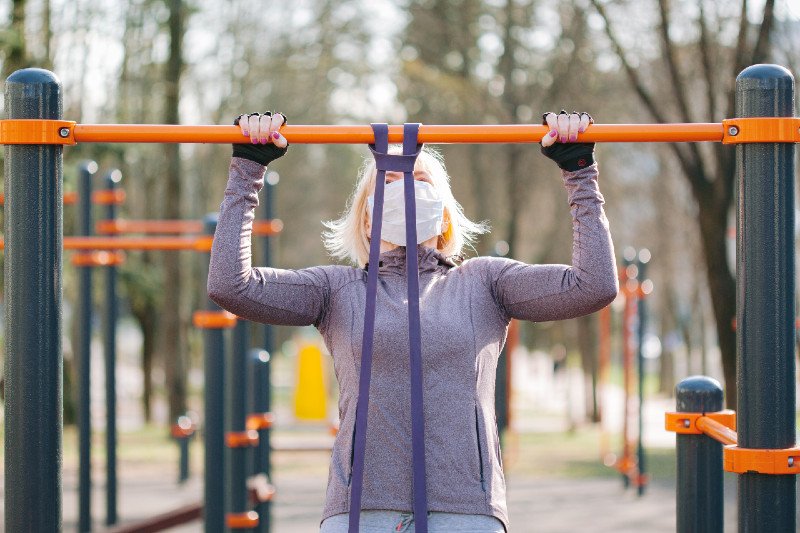
Using pull-up assist bands effectively depends not only on resistance but also on your grip position. The way you hold the bar influences which muscles are activated, your overall control, and how efficiently you can pull up resist the band’s tension. Understanding the best grips ensures safer, more effective pull-ups and proper muscle engagement.
Overhand Grip
An overhand grip, also known as pronated grip, involves placing your palms facing away from you. This grip emphasizes the upper back, shoulders, and lats while reducing bicep involvement. When using a pull-up assist band with an overhand grip, focus on controlled motion and slow descent to maximize engagement and safely pull up resist the band’s assistance.
Underhand Grip
The underhand or supinated grip has your palms facing toward you. This grip engages the biceps more while still targeting the lats. Using an assist band in this position allows beginners to focus on pulling strength and gradually build the ability to perform unassisted pull-ups while learning to pull up resist controlled tension.
Neutral Grip
A neutral grip involves palms facing each other, typically using a parallel bar or handles. This grip is often the easiest on the shoulders and wrists and provides balanced engagement of the biceps and back muscles. Incorporating pull-up assist bands in a neutral grip helps beginners safely pull up resist tension while improving overall upper-body strength.
Mixed Grip
A mixed grip, where one palm faces forward and the other backward, is sometimes used for stability or heavier sets. It engages muscles asymmetrically, requiring coordination and control. Using an assist band with a mixed grip allows you to maintain stability and pull up resist the band’s tension while focusing on proper form.
Final Thoughts
Choosing the right grip when using pull-up assist bands impacts which muscles are targeted and how efficiently you can pull up resist the band’s assistance. Overhand grips emphasize the back and shoulders, underhand grips target biceps, neutral grips provide joint-friendly control, and mixed grips offer stability challenges. Experimenting with these positions ensures balanced strength development and safer, more effective pull-ups.
